
The system that writes a citation shouldn’t be the one that checks it
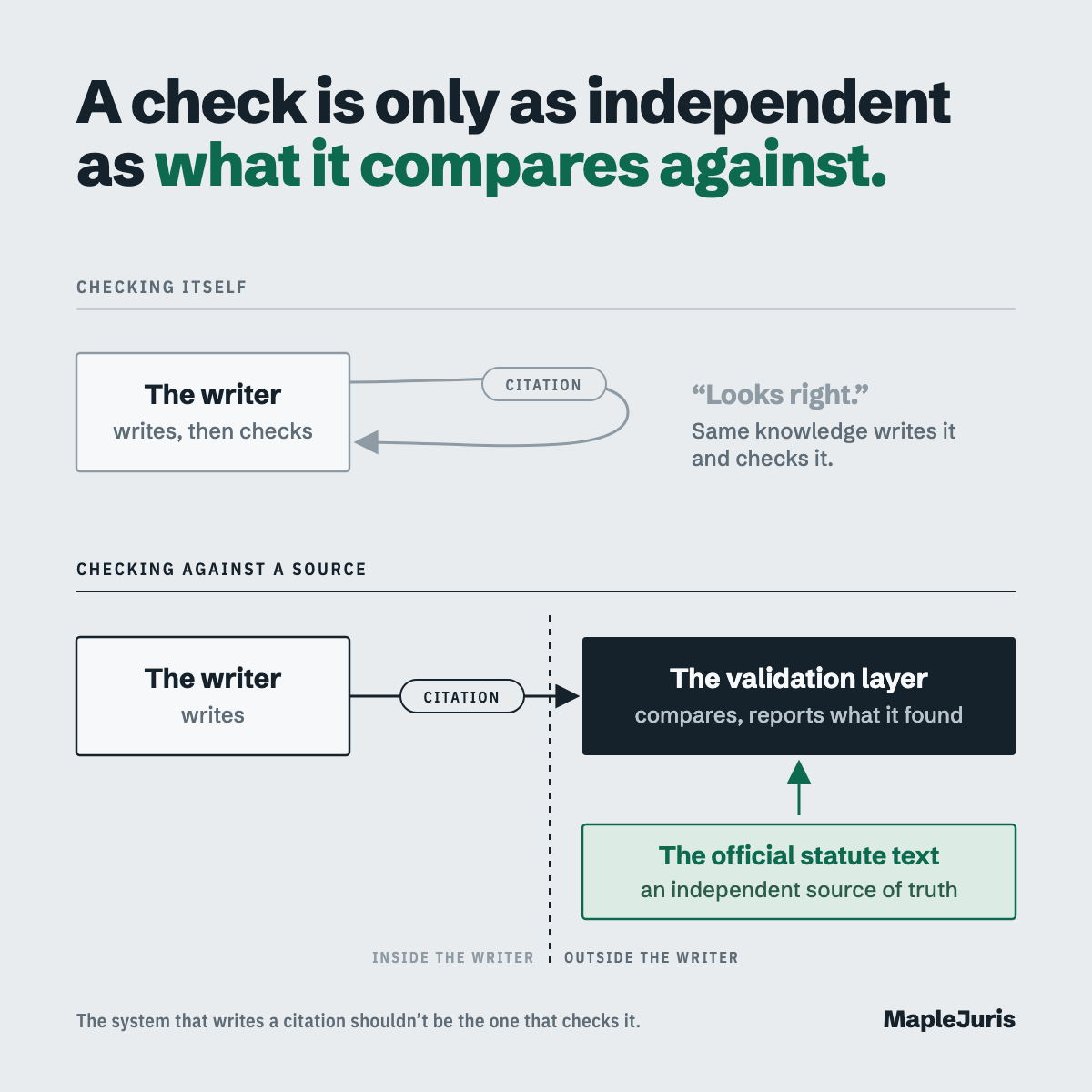
A better model makes citation mistakes less often, but not easier to catch. A check is only as independent as what it compares against.
When a legal AI product gets a citation wrong, the obvious fix is a better model.
Given the right context, a better model may write better citations. That doesn’t make it the right tool to check them.
When a model checks its own citation, it relies on the same knowledge that produced it. So the mistakes it’s most likely to make are the ones it’s least likely to catch.
A better model also makes fewer mistakes, but the ones left behind can look more convincing. They’re harder to spot, and over time people stop noticing.
Finance worked this out long ago. The person who records a payment isn’t the person who reconciles the account. Nobody is assumed to be dishonest. A check that shares the writer’s blind spots simply can’t see past them.
A check is only independent if it compares against something the writer didn’t produce. For a citation, that is the official text of the statute, as it stood on the date that matters. Not a summary of it. Not a memory of it. An independent source of truth.
That’s why validation belongs in its own layer rather than inside the writer. The writer can improve every quarter. The layer’s job doesn’t change: compare the citation against the source, and report what it found.
But that source doesn’t stand still. Statutes are amended, provisions are repealed and replaced, new Acts come into force. Someone has to keep it complete and current, every day.